





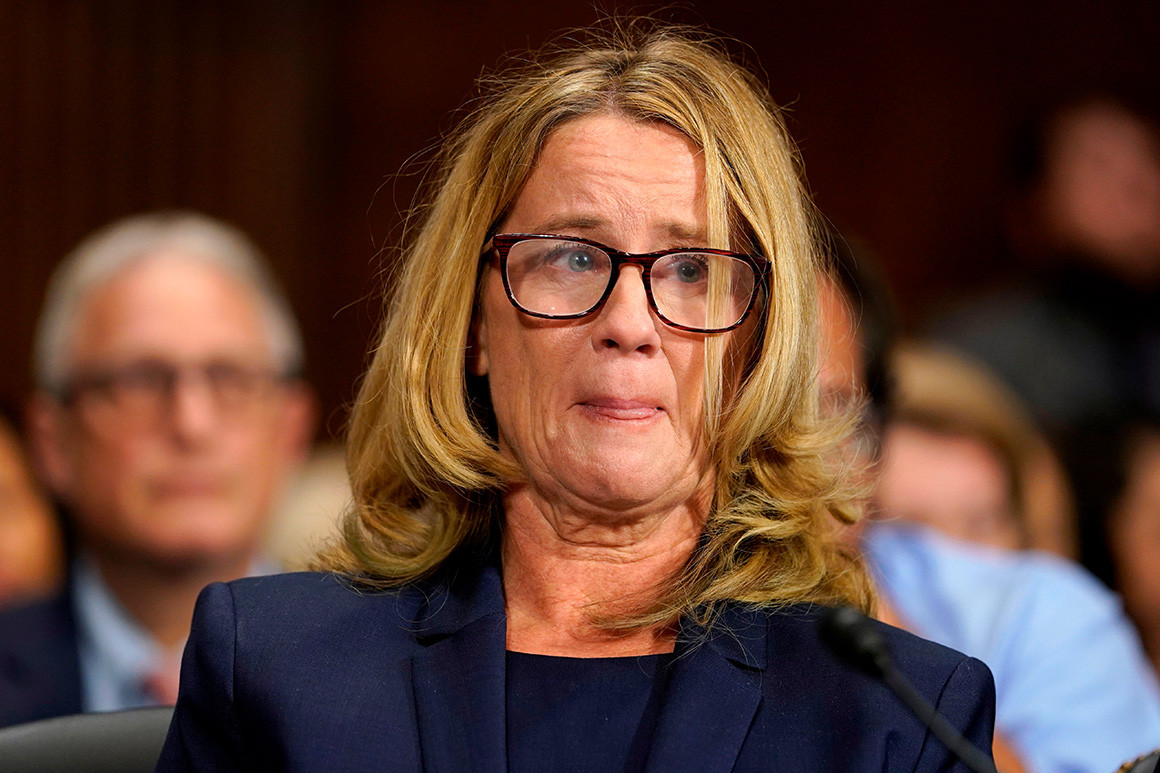
Kathleen Parker, a writer for the WaPo, likely angered most of her paper’s readership by declaring that her paper was dead wrong in calling Christine Blasey Ford a hero. But, she is right. Ford was the most discredited witness since Hillary Clinton. Ford, as you may well remember, accused Supreme Court nominee Brett Kavanagh sexually assaulted her. Her problem was that all of her alleged wi8tnesses testified against her and at least two of them claimed they were threatened by Democrats if they refused to lie in Ford’s behalf.
Parker wonders when the media will finally get around to discussing the book written by one of the victims of the unsubstantiated allegations, Mark Judge — and when the media will finally recognize Blasey Ford’s motives:
VISIT OUR YOUTUBE CHANNELFord, you’ll recall, is the California psychologist with two front doors in her house who, in testimony to the Senate Judiciary Committee in 2018, accused Kavanaugh of assaulting her at a high-school-era party while another boy, Mark Judge, allegedly stood by. Judge, who kept his distance and silence during Kavanaugh’s confirmation hearings — in part, he has said, to avoid further harassment by Democratic interlocutors — released his own version of those events and the aftermath in “The Devil’s Triangle: Mark Judge vs the New American Stasi” (2022).
As with Kavanaugh, Ford’s accusation against Judge was embraced by most of the news media despite an absence of evidence or corroborating testimony. No one who was supposed to have been at the party where Ford was allegedly assaulted remembered it, or her. Ford herself was unable to nail down the year the party took place (but settled on 1982 after several stabs) or where it was held, how she got there, how she got home or any other details, except that she herself had consumed just one beer, according to her testimony. Her claims against Kavanaugh ultimately were unsubstantiated.
And what about Judge? “Roadkill” is the way constitutional lawyer Jonathan Turley described Judge’s invisible role in this tale.
That’s strong language, but Parker doesn’t stop there. She reveals that she tried researching Blasey Ford’s allegations for a book of her own “that never came to fruition,” but Parker did get a chance to take a closer look at Leland Keyser, a woman whom Blasey Ford claimed to be a witness to an assault that she could neither specifically date or place. Keyser denied ever having witnessed any such attack on Blasey Ford, either by Kavanaugh or anyone else, and told that to the FBI.
When Keyser wouldn’t budge, Parker recalls, Blasey Ford and her enablers tried intimidating her into compliance, and then smeared her over a painkiller addiction. That provides an interesting parallel to Mark himself, whose struggles with addiction ended up as media fodder for reporters responding to every crank that emerged with nonsense stories about Kavanaugh’s partying. (Remember Michael Avenatti’s attempt to use Julie Swetnick and create a nonsense allegation of Kavanaugh-led rape gangs?)
For most of us, this is old news, or at least it was until the mainstream media threw another lovefest for Blasey Ford last month. But if they’re interested in the truth, Parker rightly argues, why aren’t they revisiting Leland Keyser?
And why after two years will they still not acknowledge Mark’s book and testimony?


