





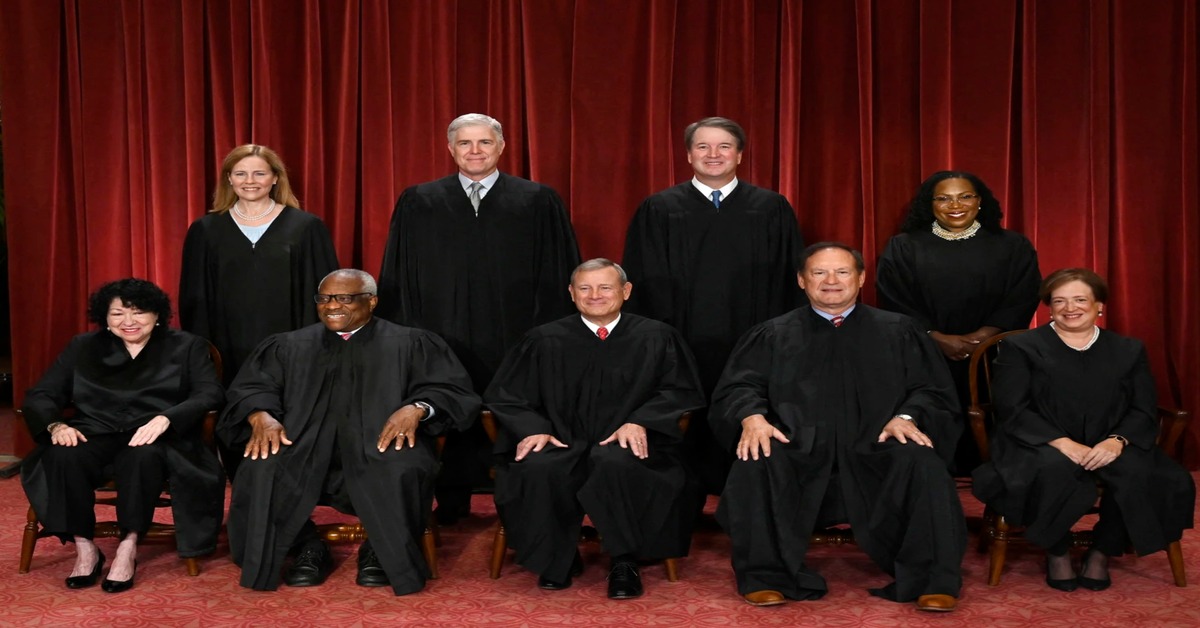
The Supreme Court’s recent decision in Trump v. United States has significant implications for presidential immunity. In this landmark case, the Court ruled on the extent to which a former president is protected from prosecution for official activities undertaken while in office, but not for unofficial acts.
The Supreme Court’s Decision
In a 6-3 decision, the Court remanded the case to a lower court, emphasizing that the ruling does not determine whether former President Trump is immune from prosecution related to efforts to alter the 2020 election results.
“The President enjoys no immunity for his unofficial acts, and not everything the President does is official,” wrote Chief Justice John Roberts for the majority. He further clarified, “The President is not above the law. But Congress may not criminalize the President’s conduct in carrying out the responsibilities of the Executive Branch under the Constitution. And the system of separated powers designed by the Framers has always demanded an energetic, independent Executive,” he said.
This decision stems from Special Counsel Jack Smith’s federal election interference case against Trump, which includes charges of conspiracy to defraud the United States, obstruct an official proceeding, and conspiracy to violate rights.
READ THE SCOTUS OPINION:
VISIT OUR YOUTUBE CHANNELThe Dissenting Opinion
Justice Sonia Sotomayor, along with Justices Elena Kagan and Ketanji Brown Jackson, dissented, arguing that the judgment “makes a mockery of the principle, foundational to our Constitution and system of government, that no man is above the law.” They criticized the majority for granting Trump immunity beyond what is warranted, asserting that “our Constitution does not shield a former president from answering for criminal and treasonous acts.”
Separate Concurrence by Justice Clarence Thomas
Justice Clarence Thomas wrote a separate concurrence, questioning the constitutional legitimacy of Jack Smith’s appointment as special counsel. He highlighted concerns that “the Attorney General purported to appoint a private citizen as Special Counsel to prosecute a former president on behalf of the United States.” Thomas argued that if the office of the Special Counsel has not been lawfully established, then Smith cannot proceed with the prosecution.
Broader Implications for Future Presidents
During the April 25 arguments, both liberal and conservative justices expressed concerns about the broader implications of the case for future presidents. Justice Samuel Alito questioned whether prosecuting a former president could destabilize the country, leading to a cycle where political opponents use the legal system to target each other.
Justice Ketanji Brown Jackson, however, warned that removing the potential for criminal liability could embolden future presidents to commit crimes without fear of repercussion. She asked, “If someone with those kinds of powers, the most powerful person in the world with the greatest amount of authority, could go into office knowing that there would be no potential full penalty for committing crimes. I’m trying to understand what the disincentive is from turning the Oval Office into, you know, the seat of criminal activity in this country,” she said.
Justice Brett Kavanaugh emphasized the long-term impact of the decision, noting, “This will have huge implications for the presidency,” adding, “I’m not talking about the present, so I’m talking about the future,”
Justice Neil Gorsuch highlighted the enduring nature of the ruling, stating, “We’re writing a rule for, yes, the ages.”
Reaction from Former President Trump
Following the decision, former President Trump told Fox News Digital, “I have been harassed by the Democrat Party, Joe Biden, Obama, and their thugs, fascists, and communists for years, and now the courts have spoken.” He declared the ruling a victory for the Constitution and democracy, stating, “Now I am free to campaign like anyone else. We are leading in every poll, by a lot, and we will make America great again.”
Conclusion
The Supreme Court’s decision in Trump v. United States marks a critical juncture in defining the limits of presidential immunity. While it protects former presidents from prosecution for official acts, it leaves the door open for accountability regarding unofficial conduct. The ruling’s implications will undoubtedly influence the legal landscape and the functioning of the executive branch for years to come.
#presidentialimmunity #SupremeCourt #TrumpCase


