


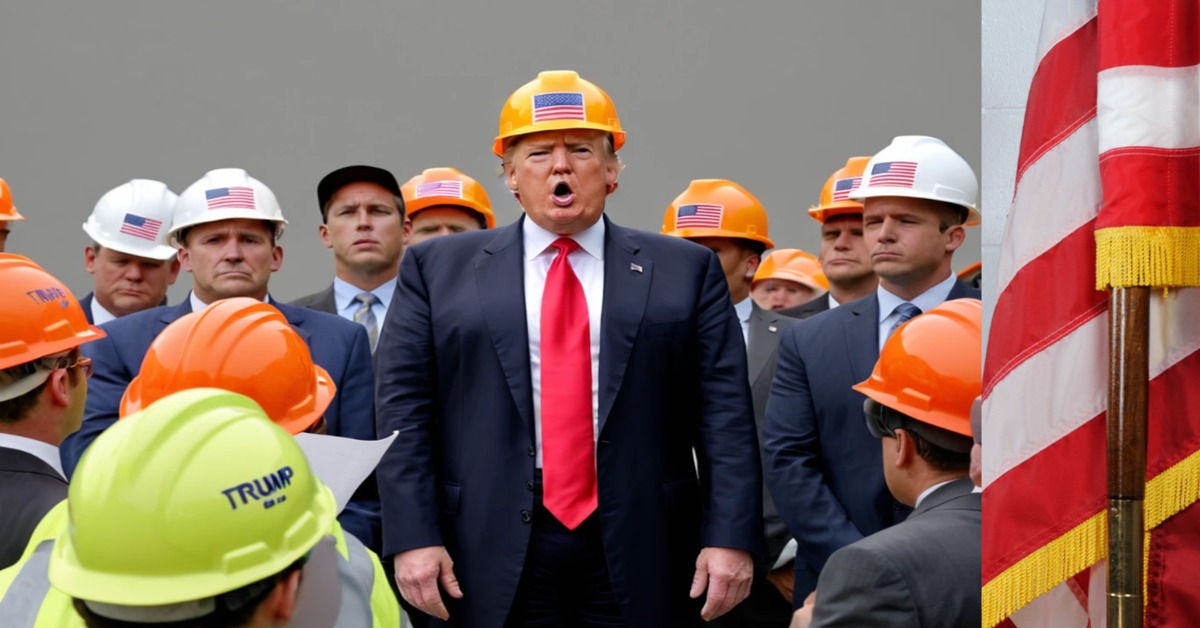
In a surprising turn of events, the largest labor union in the U.S., the Teamsters Union, has delivered a significant blow to Kamala Harris’s campaign. Historically loyal to Democratic presidential candidates, the union refused to endorse Harris, signaling a potential shift in the political landscape. This move is monumental, not just for the current election but for the foreseeable future of U.S. politics.
The Teamsters gave a tacit endorsement for Trump. The union, with over 1.2 million members, typically backs Democratic candidates, but this year, they refused to support Kamala Harris. Instead, polling suggests Trump is overwhelmingly favored by union members, leading by a significant margin of 59% to 33%.
A Historic Shift in Union Support
The refusal of the Teamsters to endorse Harris represents a seismic shift in traditional union politics. The media, in an attempt to downplay the significance, reports that the union is not endorsing either candidate. However, this is akin to the left-leaning teachers’ union refusing to endorse a Democrat—it’s unheard of. For decades, the Teamsters have backed Democratic candidates such as Al Gore, John Kerry, Barack Obama, Hillary Clinton, and Joe Biden. The decision to withhold their endorsement from Harris is unprecedented and reflects deeper dissatisfaction within the union’s rank-and-file members.
Teamsters Union President Sean O’Brien expressed disappointment with the Democrats, stating that Harris and her campaign had ignored the union’s outreach efforts. O’Brien noted that while the Republicans were quick to respond to the union’s concerns, the Democrats failed to engage, leaving many union members, traditionally lifelong Democrats, disillusioned.
Trump’s Response and the Bigger Picture
VISIT OUR YOUTUBE CHANNELWhen asked about the Teamsters’ decision, Trump called it a “great honor” and noted the historic nature of the union’s stance. For the first time in decades, the Teamsters had refused to back a Democratic candidate. This, according to Trump, could play a pivotal role in key industrial states like Wisconsin, Michigan, and Pennsylvania—states where the working-class vote is crucial.
Mike Cernovich, a conservative political commentator, remarked that this tacit endorsement of Trump signifies a major win for the former president. Cernovich pointed out that Harris’s stance on issues like fracking bans and gun control alienated working-class voters, who now see Trump as a champion of their interests. This union support could be the deciding factor in November’s election, with the potential to reshape the political map for years to come.
The Realignment of the Working-Class Vote
The significance of this shift cannot be overstated. In July, when Biden was presumed to be the Democratic nominee, union workers supported him by eight points. Fast forward to now, and Trump has surged to a 27-point lead among labor union members—a stunning 35-point swing in just a few months. This dramatic realignment reflects the growing divide between the Democratic Party and its once-reliable base of blue-collar workers.
For decades, Democrats have relied on the support of working-class voters in states like Wisconsin, Michigan, and Pennsylvania. These voters were instrumental in flipping key swing counties to Biden in 2020. However, as the Harris campaign struggles to resonate with these voters, Trump’s message is gaining traction. Harris’s progressive policies, particularly her stance on fracking, have alienated blue-collar voters who are increasingly turning to Trump as their candidate of choice.
Implications for Future Elections
This shift in labor union support could have far-reaching implications beyond the 2024 election. If the Teamsters’ tacit endorsement of Trump signals a broader realignment of labor unions with the Republican Party, it could reshape the political landscape for years to come. Traditionally, labor unions have been a cornerstone of Democratic electoral strategy, particularly in swing states. Without their support, Democrats could struggle to maintain their grip on these key battlegrounds.
In conclusion, the Teamsters’ refusal to endorse Kamala Harris is more than just a symbolic snub—it’s a potential game-changer. With the working-class vote increasingly aligning with Trump, the 2024 election could mark the beginning of a new political era. As the Harris campaign grapples with this unprecedented loss of support, Trump is poised to capitalize on this momentum, potentially securing not only a victory in November but also a lasting realignment of the American electorate.
#TeamstersUnion #2024Election #TrumpSurge