


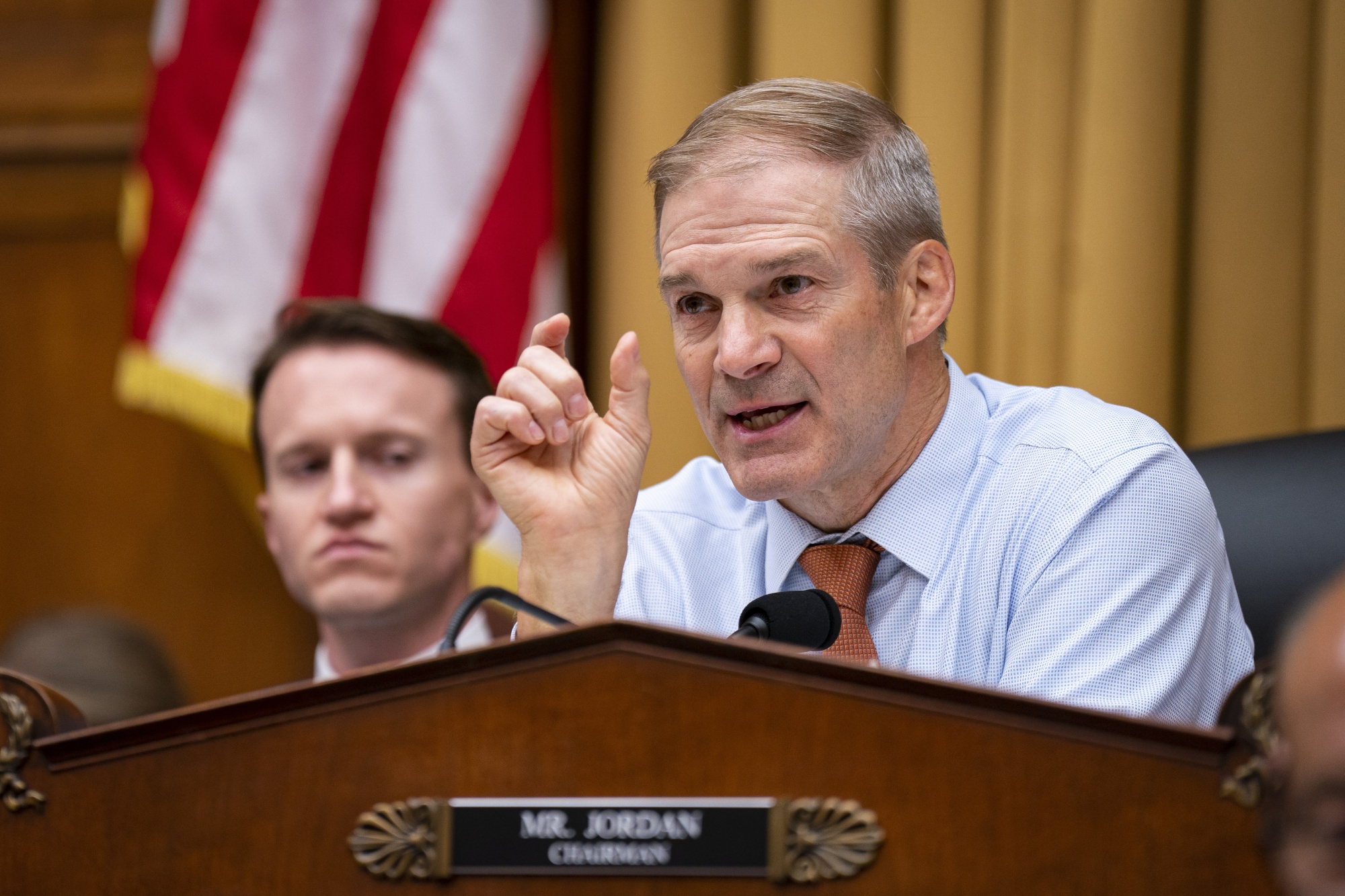
The House Judiciary Committee is investigating whether major advertisers ran afoul of antitrust laws by colluding to decide which sites to blackball. The committee, chaired by Rep. Jim Jordan (R-OH), obtained documents from the World Federation of Advertisers, and they show how the WFA has a strategy to decide which sites to prevent major advertisers from doing business with disfavored news outlets. The idea is to bankrupt sites that don’t toe the Biden/Stalin line when it comes to radical policies. They could be violating antitrust laws.
Jordan wrote in a letter to demand documents from advertisers:
“The World Federation of Advertisers (WFA) through its Global Alliance for Responsible Media (GARM) initiative may be acting inconsistent with U.S. antitrust laws and congressional intent by coordinating GARM members’ efforts to demonetize and eliminate disfavored content online.”
“Evidence the Committee has obtained suggests that GARM members, led by Steer Team members, are colluding to demonetize conservative platforms and voices. Further, this coordination does not always revolve around ‘brand safety’ and ‘harmful’ content as GARM publicly claims, but instead the desire to censor conservative and other views that GARM members disfavor.”
The letters indicate that documents obtained by the committee suggest that the group tried to blackball mainstream conservative news organizations, specifically asking for “communications referring or relating to conservative news outlets, including Fox News, Daily Wire, and Breitbart.”
WFA announced the GARM’s creation at the 2019 Cannes festival, a gathering of global elites, amidst complaints about :
VISIT OUR YOUTUBE CHANNEL“disinformation” and “fake news,” but later that year said it would become a flagship project of the World Economic Forum (WEF)’s “Platform for Shaping the Future of Media, Entertainment and Culture.”
In an announcement that seemed like something from Darth Vader, the World Economic Forum stated, “The Global Alliance is creating a safe media ecosystem.”
“GARM focuses on viewer safety for consumers, reducing risks for advertisers, developing credibility for digital platforms and, more broadly, ensuring a sustainable online ecosystem,” it said. “Partners involved in the Global Alliance for Responsible Media through the Forum’s Platform for Shaping the Future of Media, Entertainment and Sport include companies such as LEGO Group, Procter & Gamble, Unilever, NBC Universal – MSNBC, Dentsu Group, WPP (through GroupM), Interpublic Group, Publicis Groupe, Omnicom Group, Facebook and Google.”
In 2022, GARM added “misinformation” to the types of online content that it views as unethical to run ads against.
It said companies should look to firms like NewsGuard, the Global Disinformation Index, and the Journalism Trust Initiative to decide which news outlets to do business with, writing that the groups “can help ensure that ad buyers and users looking for news can be in safe and suitable places.”
GARM says it provides members with “Brand Safety.” For-profit firms like Newsguard have shown what that means in practice: Companies that might buy ads are given lists of what TV programs, channels, podcasts, or newspapers are either safe to advertise on or should be avoided. This is billed as avoiding risks to their reputation or boycotts—essentially saying that if a company wants to avoid boycotts from the Left or smear campaigns, they should not do business with certain media outlets.
In a progress report in 2022, GARM boasted of qualities that, viewed in another light, could show anti-competitive practices.
“GARM’s launch was propelled forward by uncommon collaboration, a unique way of working recognizing that all sectors of the advertising industry and companies benefit from partnering to create new brand safety standards and solutions that could be accepted industry-wide, where there had been no established protocols,” it said.