





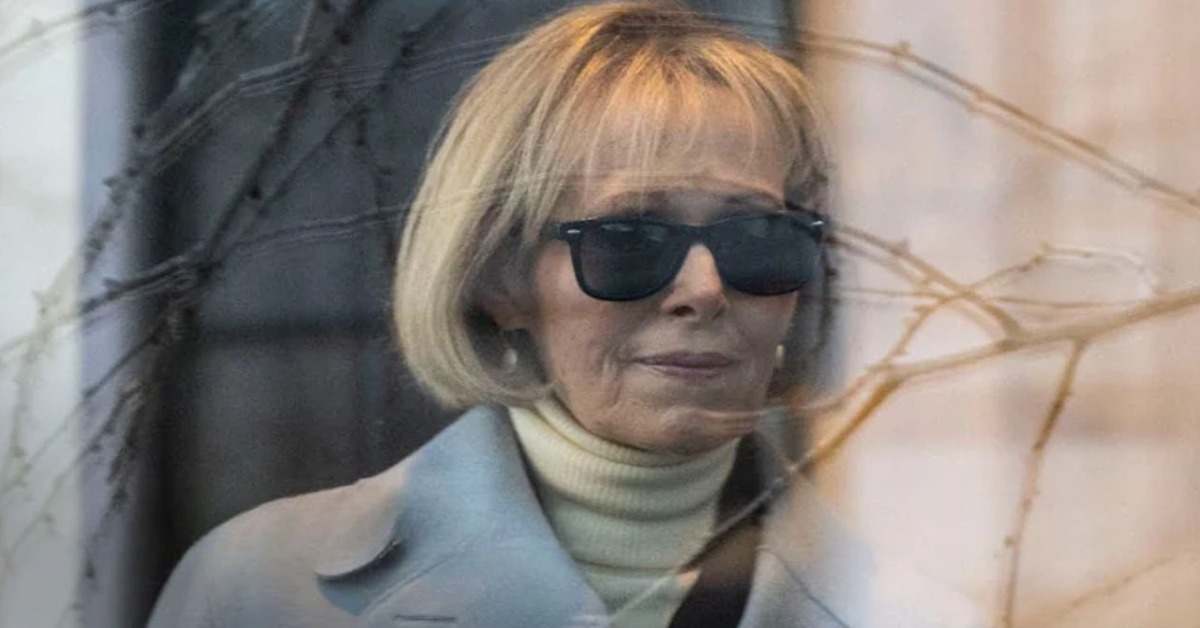
The civil action brought by E. Jean Carroll against Donald Trump is based on new legislation in New York, and survivors hope that the attention brought to it by the former president’s verdict this week will encourage other victims to use it.
I can’t help but wonder if this new law was created as part of a plan to “get Trump.” It’s a legitimate question. After all, the Democrats went to great lengths to make every American’s life miserable during the COVID-19 pandemic, just to blame it all on Trump. They feared Trump was going to win 2020, even with Dominion. I’m not saying E. Jean Carroll knew the law may have been created to get Trump. She seems a bit of a loon when you watch her interviews and so she may have been acting in good faith, believing a man who says he was never alone with her and doesn’t remember her sexually assaulted her. Remember, this is a woman who, during a media interview, said she thinks most people think rape is sexy.
The law created a one-time opportunity for adult sexual assault survivors in New York to pursue a civil complaint against an abuser or institution that shielded the abuser, regardless of when the assault occurred or whether it was outside the statute of limitations. However, that opportunity closes in six months.
“We want people who think they might want to utilize this very precious window that we opened for them, to know that they need to act soon,” said Marissa Hoechstetter, one of a handful of sexual assault survivors who gave their time for years to help enact the Adult Survivors move.
The bill, which has a one-year implementation period ending in late November, follows a 2019 law that increased the ability of survivors of child sexual abuse to file civil claims.
Advocacy groups hope that the Carroll case will encourage more people to come forward. Tamika Payne, acting executive director of the New York State Coalition Against Sexual Assault, stated that it takes a long time for survivors to reach a point where they can go through the judicial system and face the scrutiny that comes with it.
VISIT OUR YOUTUBE CHANNEL“These retrospective windows allow survivors the time that we know is necessary to heal and get to a place where they can come forward,” she went on to say.
A day after the verdict was read, Alison Turkos, another sexual assault survivor, posted on social media, inviting strangers to contact her if they needed assistance finding a lawyer. It’s a continuation of the months-long effort she and others have made to raise awareness of the law.
Turkos, who talked publicly about being raped in 2017 and later sued law enforcement over their response to her case, said it might be difficult to find a trauma-informed attorney or estimate how much to pay them.
“All of these questions that come up, that can be really hard when you make the decision to file a lawsuit,” she told me. “As someone who has been inside the system for years, I’m not saying I’m an expert, but I just have institutional knowledge that I’m not going to gate-keep.”
It is unclear how many people have filed civil claims under the statute, but approximately 70 litigants were expected to have filed complaints earlier this year. Women who are currently or have previously been detained in New York stated last year that they want to pursue claims for alleged sexual abuse by prison authorities.
Hoechstetter, who has previously gone public about being sexually attacked by an OB-GYN accused of attacking dozens of women, says the law now allows survivors to seek justice through mediation rather than formal accusations. She stated that this is crucial context.
“We’ve given people leverage and power, and that is what I think for me is the takeaway about the law,” she went on to say. “It’s not so much about how many cases get filed or maybe a verdict, although obviously we want to see these verdicts go a certain way. It’s about giving people back their power.”
Carroll launched a legal action against Trump for violence and defamation within hours of the law being effective in late November. (She filed a separate defamation claim in 2019, which was postponed.)
Carroll claimed Trump assaulted her in a dressing room during a fortuitous meeting at a Bergdorf Goodman store in New York City in the 1990s. After she spoke out about her experience, she claimed Trump defamed her on social media when he refuted the accusation. Trump refuted the charges.
On Tuesday, a jury concluded Carroll did not prove her rape claim but agreed Trump is liable for sexual assault and slander. The jury awarded her $5 million in damages.
Trump does not face jail time in connection with the case, but it comes as he contemplates another presidential run and faces other criminal accusations stemming from various probes of his tenure in office.
“I filed this lawsuit against Donald Trump to clear my name and to get my life back,” Carroll said in a statement released Tuesday. She went on to say: “This victory is not just for me but for every woman who has suffered because she was not believed.”
Carroll tweeted “WE WON” on Wednesday.
Deborah Tuerkheimer, a law professor at Northwestern University and author of “Credible: Why We Doubt Accusers and Protect Abusers,” observed the Carroll case and looked for “credibility discounting”—instances in which survivors of sexual assault face unfair barriers to being believed in various forms.
Tuerkheimer said it was vital for jurors in the Carroll case to reject such attempts in a high-profile trial, but she said that it did not erase the immediate issues for survivors in other cases.
“But this is how the credibility discount gets dissolved,” she went on to say. “It’s moments like this that accumulate over the course of years and decades that give me hope that we’re seeing progress,” she told me.
Payne stated that while the Carroll case is noteworthy and demonstrates the benefits of the new law, much more work remains to be done to provide equitable access to justice for all.
“We need to see the law work for everyone,” she went on to say.
Payne believes it is also critical for public authorities to address years of decreasing financing for state and federal services that assist victims of crime, especially survivors of sexual assault. Her organization and other advocacy groups are lobbying the New York legislature and Governor Hochul to allocate approximately $26 million to the Office of Victim Services in the state budget.
“You do not have to face this alone,” Payne told any survivors who may submit a claim or seek other assistance. “There are organizations, and we are one, who are here to help you navigate your options.”
Turkos expects that state lawmakers may consider extending or abolishing the November 2023 deadline. And she hopes that other states may explore similar legislation. (California has a more limited statute on the books) Turkos stated that she was willing to fly to other legislatures to testify about the benefits of such measures if it assisted other survivors of sexual assault in seeking justice.
“We are better when we work together,” she went on to say. “If you want to know what got us there, I will tell you everything. It’s not true survivor justice for us as advocates, activists, and survivors to hold on to this information.”
Hoechstetter stated that supporters had also approached her about adopting similar legislation abroad. She’s optimistic about the work that has been done in New York and what could happen elsewhere.
“It is a feeling of pride because it is a journey,” she told me. “I’m not like, ‘Oh, what’s next?’ I feel like we’re still in it. I think just making sure people know about it and know there’s a community of people—whether they want to be connected or remain anonymous—who did this for them, are rooting for them, and support them.”
#EJeanCarrollDonaldTrumpCase #AdultSurvivorsActNY #JusticeForSurvivors


