


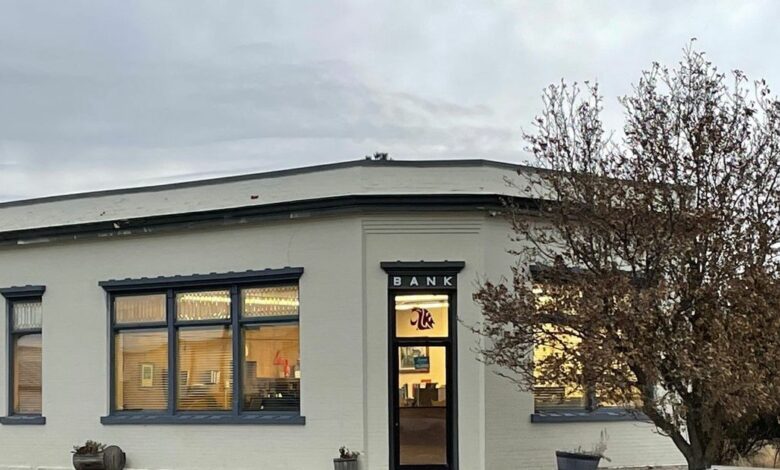
Among the many startling assets discovered in the bankruptcy of the cryptocurrency exchange FTX is a modest ownership in one of the country’s smallest banks, which might pose serious problems.
Farmington State Bank is located in Whitman County, near the Idaho border, about an hour south of Spokane. Farmington has five employees. According to Josey Booth, director of business operations at Moonstone Bank and Farmington State Bank, it has roughly 25 staff working remotely for Farmington State Bank and Moonstone Bank.
Moonstone Bank is a new digital banking section of Farmington State Bank that has not yet been made available to the public, according to Booth.
Farmington State Bank, which has been at the same location since 1911, does not have online banking or a credit card.
It’s unclear how FTX was permitted to acquire a stake in a U.S.-licensed bank, which would require approval from federal regulators.
The relationship between the tiny bank and the bankruptcy of FTX raises new questions about the exchange and its activities. Among them is the question of how tightly FTX, which was based in the Bahamas, is linked to the broader financial system. What else may regulators have overlooked? And how will Farmington be dragged into the multibillion-dollar bankruptcy in the quest for FTX’s missing assets?
VISIT OUR YOUTUBE CHANNELIn March, Alameda Research, a minor trading firm and sister to FTX, spent $11.5 million in Farmington State Bank’s parent company, FBH.
Farmington State Bank was the 26th-smallest bank in the country at the time, out of 4,800. According to the Federal Deposit Insurance Corporation, its net worth was $5.7 million. FBH’s net worth was unknown on Friday.
Booth stated in a Friday interview inside the bank that while the $11.5 million investment appears substantial, it represents less than 10% of FBH’s value.
“It was a very, very small stake in the company,” he explained.
Farmington State Bank cashier Joni Denton claimed at least part of the investment was in Moonstone Bank to help it get off the ground.
According to banking regulators, Ramnik Arora, a top lieutenant of the exchange’s founder, Samuel Bankman-Fried, led FTX’s investment, which was more than quadruple the bank’s net worth. Arora was in charge of many of FTX’s much larger deals with Sequoia Capital and other venture investors that ultimately failed.
Farmington has multiple crypto connections. In 2020, FBH acquired the bank. Jean Chalopin is the chair of FBH, as well as being a co-creator of the 1980s cartoon cop Inspector Gadget and the chair of Deltec Bank, which is also situated in the Bahamas. Tether, a crypto firm with $65 billion in assets that offers a stablecoin linked to the dollar, is Deltec’s most well-known client.
Tether’s finances have long been a source of concern, owing in part to its secretive founders and offshore bank accounts. FTX was one of Tether’s major trading partners via Alameda, sparking fears that the stablecoin may have undisclosed ties to FTX’s fraudulent operations.
Deltec did not respond to the New York Times’ request for comment.
Farmington’s deposits had remained stable at around $10 million for a decade prior to the takeover. Yet, the bank’s deposits rose about 600% to $84 million in the third quarter of of 2022. According to FDIC data, nearly all of that gain, $71 million, came from just four new accounts.
Booth stated that he was unable to give any information on the depositors.
Farmington State Bank is currently known as Moonstone Bank on the internet. A few days before FTX’s investment, the name was trademarked. Moonstone’s website makes no mention of bitcoin or other digital currency. Moonstone claims to desire to help “the evolution of next generation finance.”
Farmington resident Chris Barfuss said he is not concerned about his money in Farmington State Bank. If a problem happens, he stated that he may just withdraw his money.
Farmington State Bank customers’ money is safe, according to Booth, because the bank is FDIC-insured.
“My only concern is to make sure that everyone knows and recognizes that their money is safe,” Booth said. “This bank has every intention to be around for another 135 years-plus.”
He claims that for the last three decades, the bank has been largely owned by individual shareholders.
“Honestly,” Booth added, “our current ownership has more genuine concern for this community” than previous owners in the prior 30 years.
Banking veterans, though, say it’s difficult to believe that regulators would have knowingly permitted FTX to take control of a US bank.
“The fact that an offshore hedge fund that was basically a crypto firm was buying a stake in a tiny bank for multiples of its stated book value should have raised massive red flags for the FDIC, state regulators and the Federal Reserve,” said Camden Fine, a bank industry consultant who previously led the Independent Community Bankers of America. “It’s just astonishing that all of this got approved.”