

The United States has reached a decisive moment. This is not a routine point in history. It is the kind of situation that people will revisit years from now and recognize as the place where everything shifted. What is surprising is how few people seem to notice it right now. Most individuals focus on what is comfortable in the present. They avoid hardship. They delay difficult choices. That tendency is exactly what creates risk in a moment like this.
Times like these require something stronger. They require leadership that is direct and unmistakable. Not polished language. Not safe messaging. Clear direction. A leader who is willing to stand up and say, “This is where we are going, and this is how we get there.” That idea is not new. History provides examples. John F. Kennedy did it when he challenged the nation to reach the moon. Franklin D. Roosevelt did it during the New Deal era. People still debate the outcomes, yet the principle remains the same. Major turning points demand someone willing to lead with purpose.
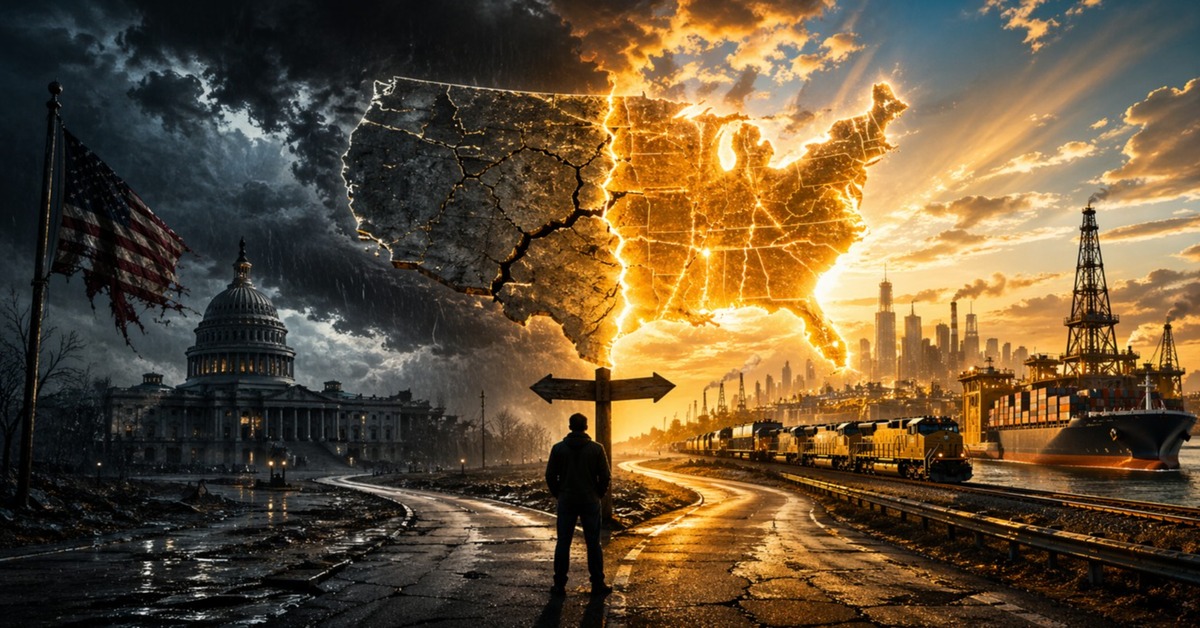
If you step back and think about the future, this period will be judged in a very simple way. People will look back and reach one of two conclusions. They will say this was the moment the country hesitated and began to decline. Or they will say this was when everything finally started to improve, and the nation changed direction. That moment may be remembered as the year 2026.
There is little room in between those outcomes. If the wrong decisions are made, the results will be serious. This is not about a temporary setback. It is about a gradual weakening that becomes permanent. Within a few decades, the country could become something very different from what people know today. If that happens, the explanation will be straightforward. Either the plan was flawed, or the public refused to accept short-term hardship in order to secure long-term stability.
This is where the discussion becomes more interesting. There is a growing belief that a larger plan is already unfolding. The issue is that it has not been clearly explained. It has not been presented in a way that is easy to understand. Because of that, people have to step back and examine the pieces on their own. When that happens, a pattern begins to appear. If this interpretation is accurate, it represents one of the most significant and peaceful shifts in global influence in modern history.
The foundation of this idea is simple. Everything is connected. The systems that were created after the Second World War are now being questioned. Some of them are being taken apart. For many years, the United States has supported global defense, engaged in foreign conflicts, and maintained systems that may have contributed to its own weakening. The current direction moves away from that model entirely.
VISIT OUR YOUTUBE CHANNELThe focus now turns inward. The priority becomes rebuilding strength within the country. The starting point is energy. Energy is essential. Without it, nothing functions. Control of energy provides leverage. As the United States expands its role as a major energy exporter, global dynamics begin to shift. Nations that once depended on unstable regions are now looking toward America. This change alone reshapes influence without the need for military action.
Alliances are also being reconsidered. For decades, the United States carried a large share of the responsibility for NATO and for stability in the Middle East. That arrangement is being challenged. Other nations are being encouraged to take on more responsibility for their own security. This is not about withdrawing from the world. It is about redefining roles. America remains a leader, but it no longer carries the entire burden.
There is also a stronger focus on the Western Hemisphere. This approach is intentional. It involves securing trade routes, reducing foreign influence nearby, and strengthening regional partnerships. Actions that once seemed unrelated, such as interest in Greenland or policy changes in Latin America, begin to make sense when viewed from this perspective. The goal is control of resources and preparation for future challenges.
Military capability remains a central element. The objective is not just readiness. The objective is dominance. A military that is clearly superior discourages conflict before it begins. At the same time, attention is shifting toward space. Space technology, satellite systems, and new industries will shape the next phase of global leadership. The nation that leads in this area will have a major advantage.
China presents a different kind of challenge. The strategy here is not direct confrontation. It is a competition across several areas. Economic strength. Technological development. Strategic positioning. The effort includes bringing manufacturing back to the United States, securing access to critical materials, and advancing artificial intelligence. The goal is to move ahead rather than engage in open conflict.
Beneath all of these actions is a broader effort. Some believe it involves dismantling a global structure that was designed to manage decline instead of encourage growth. That system has been built over many years. Changing it is complex. It requires rebuilding industries, adjusting policies, and confronting institutions that are deeply established.
There is also a difficult reality to consider. The greatest challenge may not come from outside forces. It may come from within the country. If people do not understand the direction, they will not support it. Without support, the effort cannot continue. The outcome depends on public awareness and commitment.
This is why the next few years are so important. Elections will matter. Public opinion will matter. Consistency in policy will matter. If the current direction continues, the result could be a stronger and more independent nation. A country that produces its own energy, rebuilds its industries, and protects its future. If it does not continue, there is a strong possibility that older systems will return and deepen existing problems.
In the end, this situation is about more than political debates. It is about the identity of the nation. What will the country become in the years ahead? Will this period be remembered as a time of confusion or as a deliberate effort to rebuild something stronger?
History will provide the answer. The only question that remains is which outcome will define this moment.
#americafirst #geopolitics #usstory