

Finding cocaine in the White House could become a more common occurrence as the Biden Administration ends the surveillance of the illicit coca crops in Columbia. It should make cocaine more readily available in the United States and could also reduce the price thereof. This move comes just days after the Secret Service called it quits in their unending cover-ups for the Democrats. And particularly the Bidens. Personally, I quit snorting coke. The bubbles hurt my nose.
New York Post editorial reads:
“The White House is the most secure place on the planet, crawling with feds and fitted to the doorstops with video and other surveillance tech all aimed at keeping the world’s most powerful man safe.
Yet we’re somehow supposed to believe the men and women charged with protecting the president can’t find out who dropped an 8-ball in the West Wing?”
“No wonder the rumor mill is already spinning up to lay this whole mess in Hunter Biden’s lap. There’s no evidence the drugs are his.
Yet given that America’s already seen a massive federal effort so far to protect the ne’er-do-well First Son — everything from hindering investigations of his alleged crimes to setting him up to skate via his pending sweetheart plea deal — people can be forgiven for wondering.”
VISIT OUR YOUTUBE CHANNELThe Secret Service wrapped up its faux investigation in just 11 days and without interviewing a single person. They were probably afraid that if they interviewed anyone they would solve the case. They needn’t have worried because the Secret Service couldn’t solve a 2 piece jigsaw puzzle.
Associated Press reported:
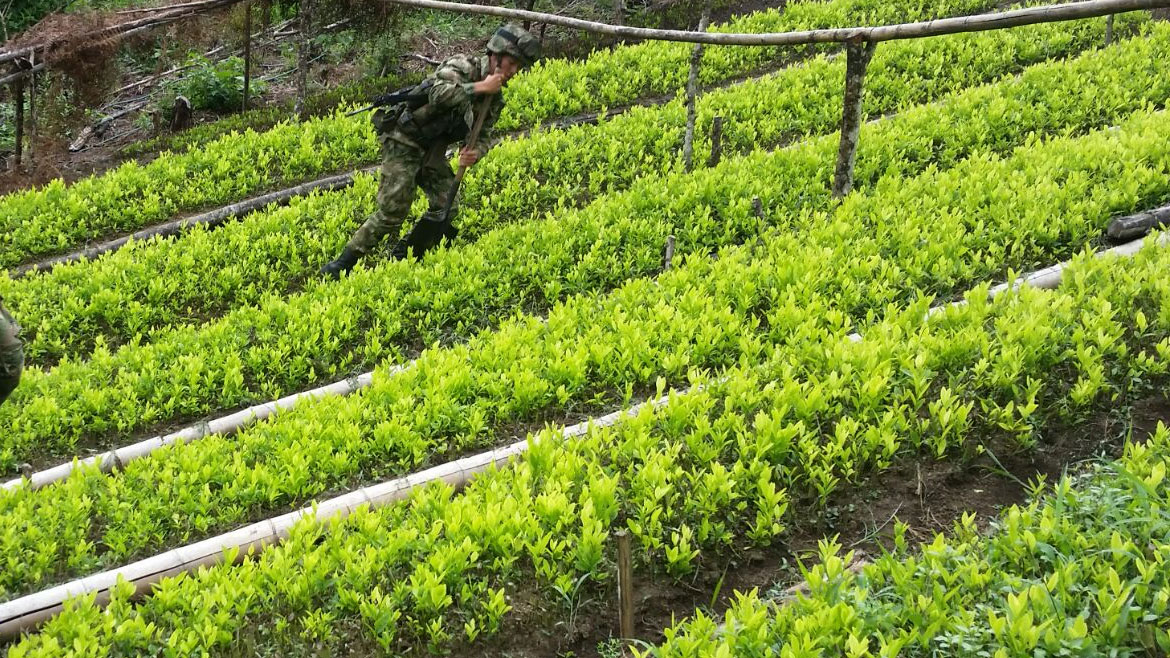
“The Biden administration has quietly ditched a key gauge used for decades to measure success in the war on drugs, suspending satellite monitoring of coca crops in Colombia as cocaine production surges in South America.
A State Department spokesperson said the move was ‘temporary’ but gave no timeframe for data collection to resume or explain why it was suspended in the first place. It was also unclear whether satellite surveys would continue in Peru and Bolivia, which together account for about half of coca production in the Andean region.”
Far-leftist Colombian President Gustavo Petro is shying away from the rural areas where coca is grown to ‘chase large-scale smugglers and money launderers who reap the bulk of the drug trade’s profits’.
“’We are constantly assessing the effectiveness of various counternarcotics efforts and make changes to our efforts as needed’, the [US] State Department spokesperson said in an emailed statement. The spokesperson gave the comment on condition of anonymity, citing agency policy. ‘We continue to work with the Government of Colombia on the monitoring of illicit coca crops’.”
Under Petro’s administration, production of the plants and the finished drug are on the rise, and destruction of the illegal crops is down by 90% compared to last year.
“’This is a gift to the Petro Administration’, Florida Sen. Marco Rubio, the vice chairman of the Senate Select Committee on Intelligence and a senior member of the Committee on Foreign Relations, said in a statement to The Associated Press. ‘It’s another example of the Biden Administration giving concessions to far-left governments in the region’.”
It’s not like situation has eased or even stabilized under former leftist guerrilla Petro. He has pushed back, arguing U.S. should pay attention instead to the fentanyl crisis.
Late last year, Al-Jazeera reported on the newest data:
“Colombian lands planted with coca, the plant from which cocaine is made, reached their highest levels in two decades [in 2021], a United Nations agency has said in an annual report.
The UN Office on Drugs and Crime (UNODC) said […] that the area growing coca in Colombia shot up 43 percent from 2020, to 204,000 hectares (500,000 acres) in 2021.
Potential cocaine production also reached record levels last year at 1,400 tonnes, up 14 percent from 2020, the agency said.”
This latest data continues an upward production trend that dates back to 2014.