


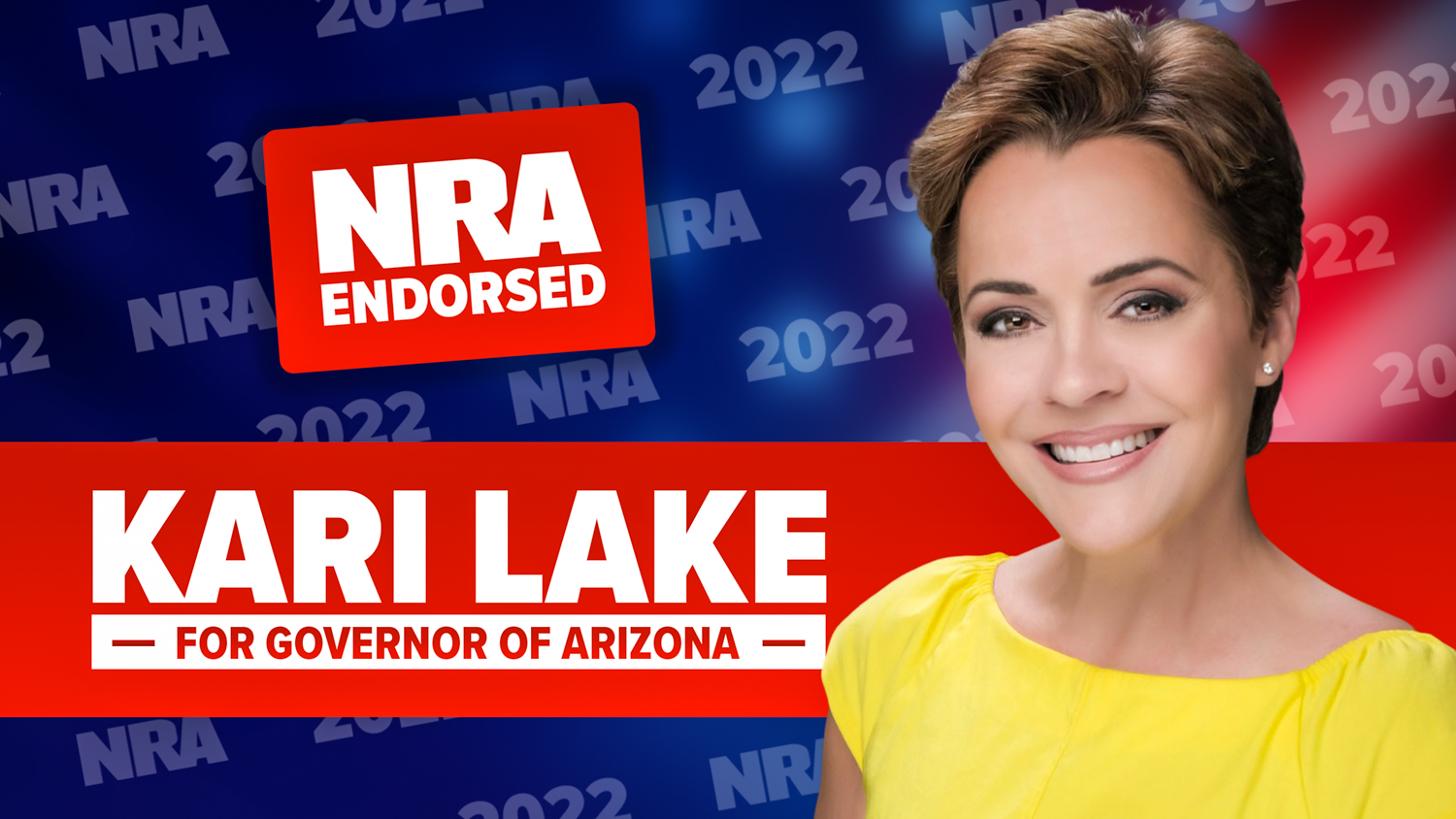
Kari Lake is not happy. She will soon be going to court and the only argument she is allowed to make is on the ballots with signatures that don’t match.
Her team made the lawful request to examine ballots and the registration ledgers needed to prove their case. But, Steven Richer, who in my opinion should spend the next few decades wearing orange jumpsuits has denied that request, even though he is required by law to hand them over.
I do not believe that it is an accident that every crooked and dirty election trick can be traced back to him because if he was doing his job, none of that would be happening.
Democracy dies in Steven Richer’s office. He should never be allowed to hold any elective office ever again. The only terms he should be able to serve would be 15 to 29 years. In fact, every election authority, including the county supervisors should be tossed out on their ear.
Maricopa County has confirmed what we all knew to be true:
Ballot signatures DO NOT MATCH.
VISIT OUR YOUTUBE CHANNELElection Officials brazenly HIDING EVIDENCE from us.
This is the smoking gun.
Unfortunately for them, I’m not giving up — even if that means legally forcing them to hand over evidence. https://t.co/feDWyYfhNS— Kari Lake (@KariLake) March 31, 2023
Maricopa County Recorder Stephen Richer, who is accused of hiding the records from Lake’s legal team, responded with a snarky tweet stating that Lake’s claims lack the evidence that he is keeping from her team. Leftist journalism nonprofit Arizona’s Law called Lake’s claim “unreal” despite the potential law violation by Maricopa County in hiding this evidence.
Gotta love that she simultaneously says we're hiding evidence, but also somehow concludes (I guess without the "evidence") that the signatures DO NOT MATCH.
Formal logic not her strong suit.
— Stephen Richer—MaricopaCountyRecorder (prsnl acct) (@stephen_richer) March 31, 2023
This request is in accordance with ARS 16-168(F), which states,
Any person in possession of a precinct register or list, in whole or part, or any reproduction of a precinct register or list, shall not permit the register or list to be used, bought, sold or otherwise transferred for any purpose except for uses otherwise authorized by this section. A person in possession of information derived from voter registration forms or precinct registers shall not distribute, post or otherwise provide access to any portion of that information through the internet except as authorized by subsection I of this section. NOTHING IN THIS SECTION SHALL PRECLUDE PUBLIC INSPECTION OF VOTER REGISTRATION RECORDS AT THE OFFICE OF THE COUNTY RECORDER for the purposes prescribed by this section, except that the month and day of birth date, the social security number or any portion thereof, the driver license number or nonoperating identification license number, the Indian census number, the father’s name or mother’s maiden name, the state or country of birth and the records containing a voter’s signature and a voter’s e-mail address shall not be accessible or reproduced by any person other than the voter, by an authorized government official in the scope of the official’s duties, for any purpose by an entity designated by the secretary of state as a voter registration agency pursuant to the national voter registration act of 1993 (P.L. 103-31; 107 Stat. 77), for signature verification on petitions and candidate filings, FOR ELECTION PURPOSES AND FOR NEWS GATHERING PURPOSES BY A PERSON ENGAGED IN NEWSPAPER, RADIO, TELEVISION OR REPORTORIAL WORK, OR CONNECTED WITH OR EMPLOYED BY A NEWSPAPER, RADIO OR TELEVISION STATION or pursuant to a court order. Notwithstanding any other law, a voter’s e-mail address may not be released for any purpose. A person who violates this subsection or subsection E of this section is guilty of a class 6 felony.

However, Blehm was denied access to these public records by Richer, who stated that because the early ballot envelopes “contain voters’ signatures,” the denial is in accordance with ARS 16-168(F) “and in the best interest of the state.”
This is false. The Statute provides that voter signatures may be “accessible or reproduced… for election purposes.”