


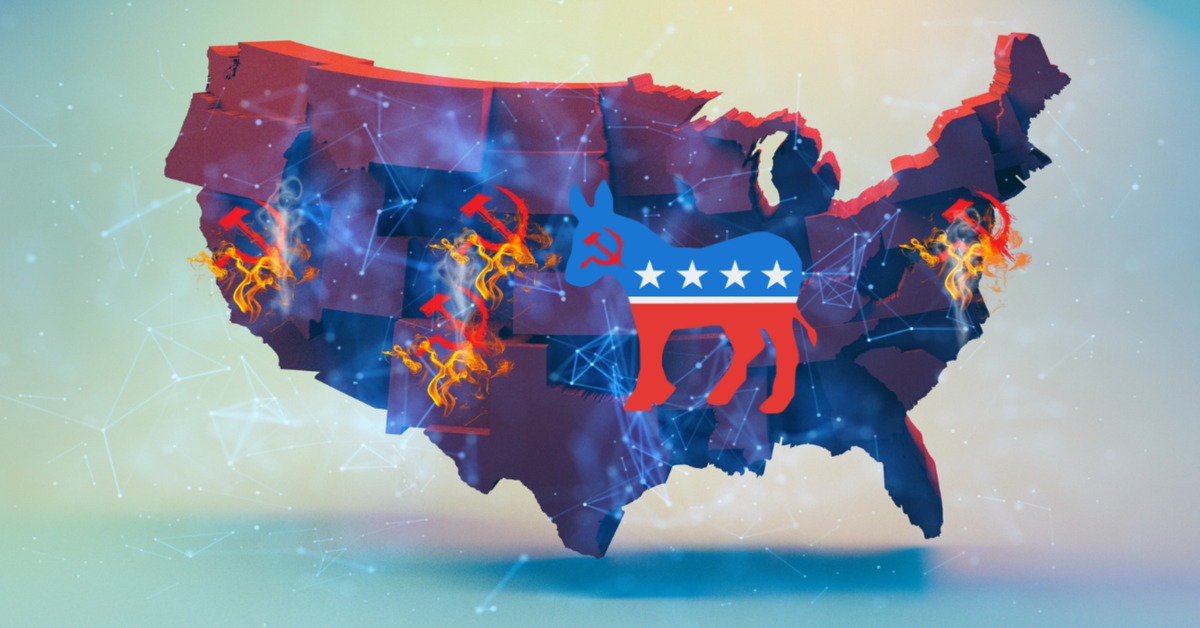
In a controversial move, Democrats are pushing to ban former President Donald Trump from appearing on state ballots for the Republican presidential primary. This decision by Colorado’s Supreme Court has sparked a heated debate, with critics arguing that it is unconstitutional and undermines the democratic process. By examining the implications of this ban, it becomes evident that it not only sets a dangerous precedent but also disregards the principles of due process and the will of the people.
The Constitutional Debate
The Insurrection Clause and its Interpretation
The decision to ban Trump from the Republican primary ballot was based on Section 3 of the 14th Amendment, which was originally drafted in the context of the Civil War. However, many legal scholars argue that invoking this clause to disqualify Trump is a misinterpretation of its intended purpose. The framers of the amendment aimed to prevent individuals who had actively engaged in armed rebellion against the government from holding public office. Trump’s involvement in the Capitol riot, while undeniably concerning, does not meet the criteria for an armed rebellion.
Due Process Concerns
One of the key arguments against banning Trump from the ballot is the absence of due process. The Colorado Supreme Court’s decision to label Trump as an “insurrectionist” without a proper legal trial raises serious concerns about the violation of an individual’s rights. By circumventing the established legal procedures and denying Trump the opportunity to defend himself, this ban sets a dangerous precedent that undermines the fundamental principles of justice.
Democratic Projection and Authoritarianism
Ironically, while Democrats have been vocal about defending the nation from Trumpian authoritarianism, the decision to ban him from the ballot can be seen as an attempt to stifle democracy. By allowing the ruling party to determine who can run against them, irrespective of the will of the people, this ban establishes an authoritarian model for elections. It is essential to remember that democracy thrives when there is robust competition and the electorate has the freedom to choose their representatives.
The Flawed Justifications
Insufficient Legal Grounds
Despite the Democrats’ claims of Trump inciting the Capitol riot, legal experts argue that he did not meet the necessary criteria for indictment. While his rhetoric may have been irresponsible, it did not amount to incitement under legal standards. The insurrection clause of the 14th Amendment was never intended to address protests against election results, but rather to address armed rebellion against the government. Drawing an equivalence between the events of January 6, 2021, and the Civil War is a dubious leap of partisan imagination.
Challenging Election Results and False Insurrection Claims
Accusing Trump and Republicans of engaging in a vast insurrection through their legal efforts to challenge the 2020 election results is misguided. Challenging election results is a legitimate part of the democratic process, and both parties have employed such strategies in the past. Painting these efforts as an insurrection is a distortion of the facts and serves to undermine the credibility of those seeking to ensure the integrity of the electoral system.
VISIT OUR YOUTUBE CHANNELVoter Integrity and Unfairness
While Trump may have exercised poor judgment in the aftermath of the 2020 election, it is crucial to acknowledge the concerns regarding voter integrity. The COVID-19 pandemic and the Democratic Party’s eagerness to mobilize their supporters led to the relaxation of voter integrity measures. The suppression of news regarding Biden family corruption scandals by Democrats and Big Tech further fueled doubts about the fairness of the election. These concerns, while subjective, highlight the need for transparency and accountability in the electoral process.
Democratic Tactics and Misconceptions
Lack of Trust in the Electorate
The decision to ban Trump from the ballot reflects a lack of trust in the American people to make informed choices. Democrats’ anti-democratic tactics, driven by their conviction that Trump is akin to Adolf Hitler, fail to recognize that a significant portion of the population supports Trump precisely because his rhetoric challenges the liberal establishment. By attempting to prevent Trump from running, Democrats risk alienating a substantial portion of the electorate and further polarizing the nation.
Populism versus Authoritarianism
Contrary to the portrayal of Trump’s approach as authoritarian, his commitment to changing the system and preventing a liberal-dominated federal bureaucracy from obstructing his governance is inherently democratic. Trump’s populist stance resonates with many Americans who feel disenfranchised by the political elite. Rather than being a threat to democracy, his desire to address systemic issues and empower the people indicates a commitment to democratic principles.
Strengthening Trump’s Support
Democratic efforts to prevent Trump from running for office have had unintended consequences. The numerous indictments and investigations initiated by Democrats have only served to rally more Americans behind Trump. The perception that these actions are an attempt to curtail the electorate’s right to choose their president strengthens Trump’s support base. Democrats need to recognize that undermining democracy in their pursuit of political goals will ultimately lead to their own defeat.
The Way Forward: Upholding Democracy
The Role of the Supreme Court
It is crucial that the U.S. Supreme Court intervenes to address the constitutional concerns surrounding the ban on Trump. The court has the responsibility to safeguard the democratic process and ensure that the rights of individuals are protected. By striking down this ban, the Supreme Court can send a strong message that attempts to circumvent the democratic process will not be tolerated.
Trusting the American People
Defending democracy requires placing trust in the American people to make informed decisions. Rather than resorting to authoritarian tactics, it is essential for Democrats to engage in constructive dialogue and present their own vision for the future. By respecting the will of the electorate and strengthening democratic institutions, the nation can move forward in unity.
Conclusion
The decision to ban Trump from state ballots for the Republican presidential primary raises serious constitutional concerns. By disregarding due process, Democrats risk setting a dangerous precedent that threatens the foundations of democracy. The justifications put forth for this ban are flawed and fail to withstand legal scrutiny. Upholding democracy requires trust in the American people and a commitment to engaging in healthy political discourse. Only by respecting the will of the electorate and upholding democratic principles can the nation move forward in unity.