

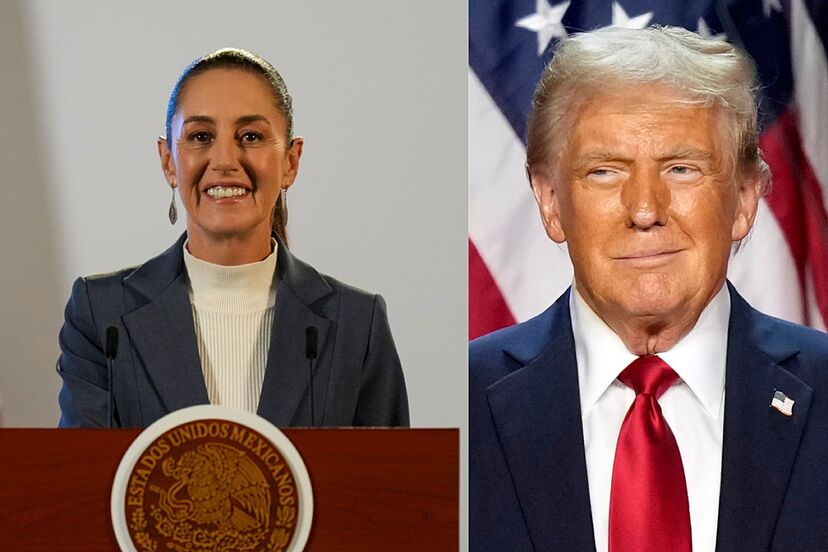
Just one day after trashing President Trump, Mexican President Claudia Sheinbaum unconditionally surrendered to President Trump and has committed to ending or at least putting the brakes on illegal immigration and Fentanyl smuggling across the border. Many people say that Trump keeps winning while others claim America keeps winning, but I contend that America keep winning because Trump keep winning and he hasn’t even taken office yet.
No doubt, he will continue his winning ways and it will probably propel JD Vance into a two term presidency since he is no squishy George Bush Sr.. During their phone call both leaders agreed to stem the flow of illegal aliens and drug trafficking. They have agreed to implement drastic measures to accomplish this. This will indicate a drastic shift in the US/Mexico relationship after four years of Mexico laughing at the Harris-Biden regime.

Sheinbaum, for her part, committed to taking immediate actions to block migration routes heading north. This move in itself should demonstrate a seismic change in the number of illegals flocking to this country. The United States is one of the largest consumer for illicit drugs and the new agreement is that Mexico will fight to reduce trafficking and the US will implement policies to discourage consumption.
Tariff Pressure and Reactions
The agreement comes amid ongoing economic tensions. Just 48 hours before this conversation, Trump threatened to impose tariffs on Mexico unless more severe measures were taken against migration and drug trafficking. This type of economic pressure has been a recurring tool for the former president in past negotiations with Mexico.
However, the implications of this agreement go beyond the economic realm. Various human rights groups have condemned Sheinbaum’s decision, warning of the risks faced by migrants who could be stranded in Mexico or forced to take more dangerous routes.
Criticism and Support
Analysts have pointed out that the shift in Mexico’s immigration policy reflects an attempt to maintain favorable relations with the incoming Trump administration, although this could test Sheinbaum’s leadership on the international stage.
On the other hand, conservative sectors in the U.S. celebrated the measure as a win for border security and immigration control—two key priorities of the new administration.
Regional Impact
This agreement not only affects Mexico and the U.S., but also Central American countries whose citizens rely on migration routes to the north. International organizations warn that this policy could exacerbate the humanitarian crisis in the region.
Next Steps
Details of the agreement are expected to be finalized in the coming days, potentially focusing on economic incentives and security cooperation. However, questions about its implementation, political cost, and humanitarian implications remain unresolved.
Today, doctors Raúl Tortolero and María Herrera Mellado, the latter an immigration attorney in the U.S. and political analyst, discussed the situation:
The call between Sheinbaum and Trump marks a pivotal moment in Mexico-U.S. relations. While the agreement could strengthen border security, it raises serious challenges in terms of human rights and regional stability. It will be crucial to watch how these policies develop and how national and international actors respond in the coming months.