





Something very serious is unfolding in one of the most important places on earth, and the stakes could not be clearer.
The Strait of Hormuz sits at the center of it. A narrow strip of water, yet it carries a huge portion of the world’s oil supply. If that flow gets disrupted, everything changes. Energy prices jump fast. Markets react instantly. Entire economies feel the pressure.
Iran knows exactly how powerful that position is.
Recent actions suggest it has been trying to use that leverage. Reports point to interference with commercial shipping, demands for tolls, and even the threat of mines. That is not random behavior. That is a strategy designed to control access to a global lifeline.
The United States is now responding in a way that leaves little room for confusion.
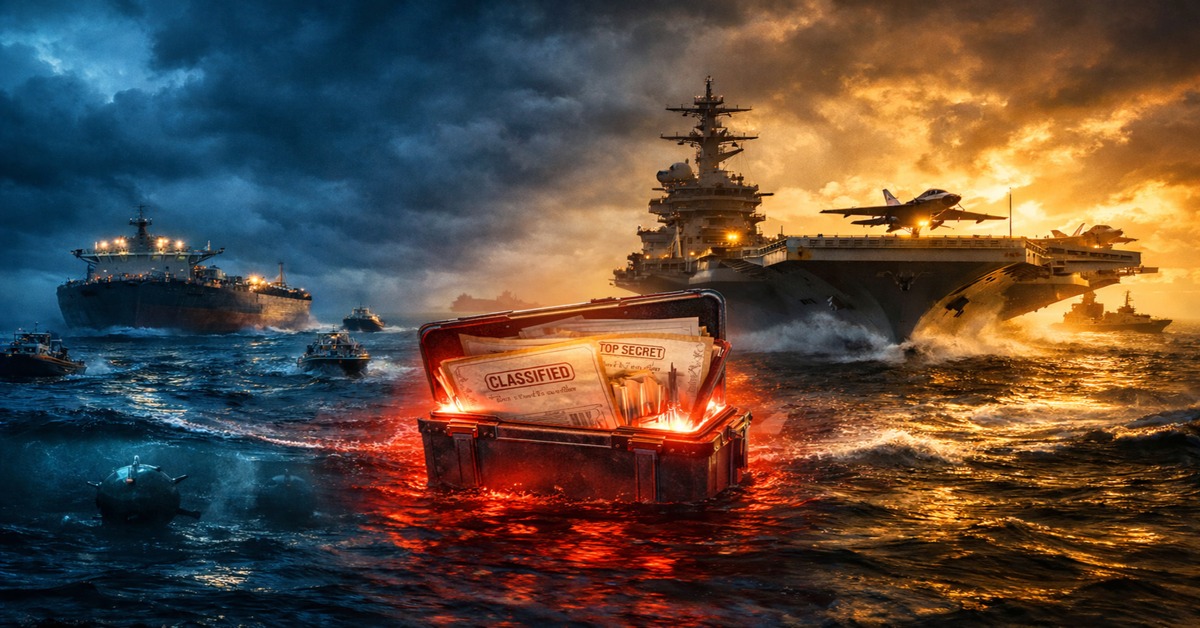
After talks broke down, President Donald Trump made a direct and aggressive move. He announced that the U.S. Navy would take control of the situation. In his words, the United States will begin “BLOCKADING any and all Ships trying to enter, or leave, the Strait of Hormuz,” and will also “seek and interdict every vessel in International Waters that has paid a toll to Iran.”
VISIT OUR YOUTUBE CHANNELThat is not symbolic. That is enforcement.
It means the United States is stepping in to guarantee that this waterway stays open, no matter what Iran attempts to do. It also means any ship cooperating with Iran’s pressure campaign could find itself stopped in open waters.
Now here is where the situation becomes even more serious.
At the same time, Trump issued a warning aimed directly at China. He said China would face “big problems” if it supplies Iran with advanced military equipment, especially air defense systems.
That warning is not just rhetoric.
If Iran gains stronger air defenses, the entire equation changes. U.S. forces would face a greater risk operating in the region. Naval control becomes harder to maintain. Air support becomes more dangerous. The effort to keep the Strait of Hormuz open becomes far more complicated.
Meanwhile, The Times of Israel reports that the “Report that China will ship new air defenses to Iran is ‘entirely fabricated,’ its embassy tells ToI
China denies a CNN report that it is preparing to ship new air defense systems to Iran,” calling it “entirely fabricated.”
“As a responsible major country, China always abides by international law and its international obligations, and never provides weapons to any party to the conflict,” the Chinese embassy tells The Times of Israel. “China firmly rejects the circulation of speculative, misleading, and false information targeting China.”
My question to you guys, do you believe China?
So the strategy is clear.
Prevent Iran from closing off the Strait. At the same time, prevent any outside power from giving Iran the tools to challenge that effort.
China sits right at the center of that second piece.
It depends heavily on oil flowing through that region. It also maintains strong ties with Iran. That creates a conflict of interest. China benefits from stability, yet it also benefits from weakening U.S. influence. Supplying Iran could shift the balance, even if done quietly.
That is why the warning matters.
This is not just about Iran testing limits. This is about whether a larger power steps in to support that challenge.
Right now, the United States is trying to shut that door before it opens.
Iran is pushing its position in the Strait of Hormuz. The United States is moving to take control of the situation. China is being told to stay out of it.
That is the reality.
And if any part of that equation shifts, the consequences will not stay contained for long.
#straitofhormuz #irancrisis #trumpchina


