

Okay, so two stories landed within days of each other, and once you put them side by side, you start hearing the same argument from two completely different directions.
The first story involves voter rolls.
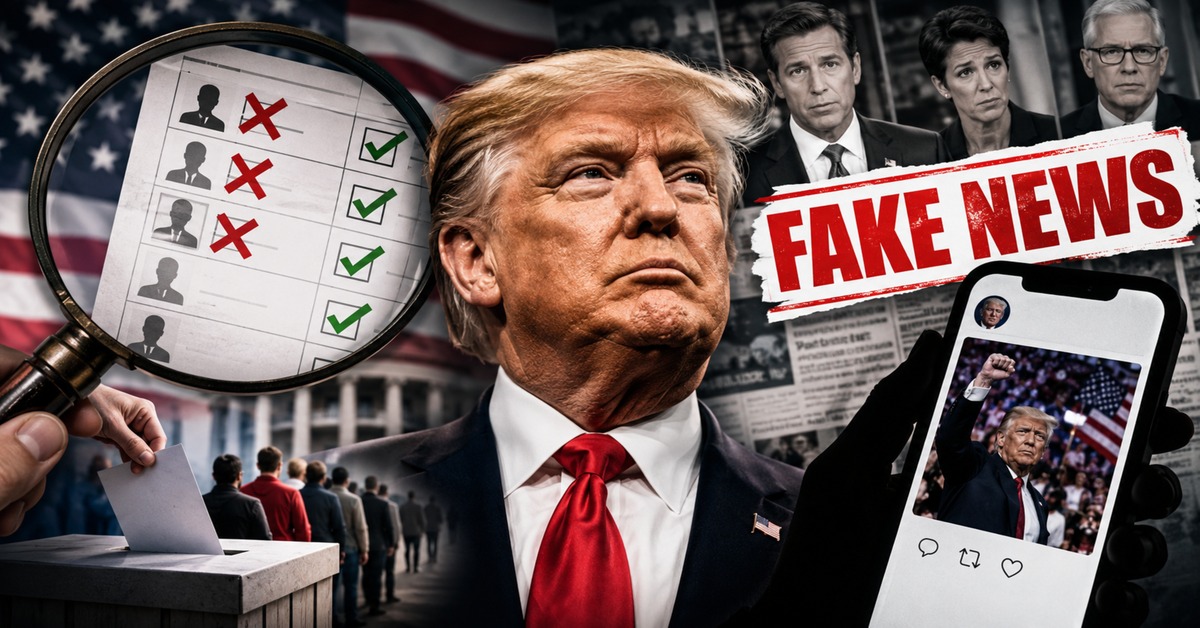
The Department of Homeland Security announced that it is reviewing voter registration records and working with states to identify registrations that may no longer be valid because of death, relocation, or other eligibility issues. President Trump responded by directing DHS to work with states to clean up voter rolls ahead of the midterm elections.
Predictably, the reaction from many on the left wasn’t, “Great. Accurate voter rolls benefit everyone.”
No. The reaction was outrage.
Which raises an obvious question. If everyone agrees elections should be fair, why does cleaning up voter rolls suddenly become controversial?
VISIT OUR YOUTUBE CHANNELSeriously. Who exactly is supposed to oppose removing deceased voters from the rolls? Is there now a political constituency for people who have been dead for ten years?
Apparently, asking whether someone is still alive before counting them as an active voter is now considered voter suppression.
We’ve reached the point where basic housekeeping is treated like a constitutional crisis.
If someone moved across the country years ago, shouldn’t the registration records reflect that? If someone isn’t legally eligible to vote, shouldn’t the voter rolls accurately reflect that too?
Those questions used to have painfully obvious answers.
Now they’re apparently partisan.
The response often sounds less like, “Those numbers are wrong,” and more like, “How dare you even look.”
That’s an interesting position.
If you’re confident the voter rolls are accurate, then verifying them should only prove your point. Audits don’t create problems. They reveal whether problems exist. Audits only create trouble for those who don’t want those problems revealed. And that would make you terrified of what an audit might find.
Then came the second story.
President Trump jumped onto social media to blast what he calls the “Fake News” media, arguing that despite relentless negative coverage, voters still handed him victories in the Electoral College, the popular vote, and the overwhelming majority of counties. His broader point was that media narratives don’t necessarily match what voters are thinking.
Whether you agree with that assessment or not, it fits into the larger debate over trust. One story is about trusting election systems. The other is about trusting media institutions. There is a reason half the country refers to the three-lettered outlets as fake news.
Together they ask the same basic question.
Should the public just accept assurances that everything is fine, or should government agencies and election officials periodically verify that everything actually is?
The Constitution guarantees every state a republican form of government. A republic depends on the consent of the governed, and that consent only has meaning when citizens have confidence that elections are conducted lawfully and accurately. Protecting the integrity of elections isn’t a partisan goal. It’s one of the most fundamental responsibilities of any government operating under a constitutional republic. If officials are unwilling to verify the accuracy of voter rolls and election procedures, they shouldn’t be surprised when public confidence begins to erode.
For years we’ve been told election integrity measures are unnecessary because voter fraud is supposedly too rare to matter. Fine.
Then why object to verifying the rolls?
If there isn’t a problem, an audit confirms it.
If there is a problem, an audit finds it.
Either way, honest voters benefit.
That’s the part that’s difficult to understand.
Election integrity isn’t supposed to help Republicans.
It isn’t supposed to help Democrats.
It’s supposed to help the voters who follow the law.
Yet every time someone proposes cleaning up voter rolls, verifying registrations, or confirming eligibility, the same people who insist elections are perfectly secure suddenly become very uncomfortable with anyone checking.
It’s an odd position.
Imagine a bank saying, “Our books are perfectly balanced. Also, absolutely nobody is allowed to audit them.”
Most people would laugh.
Apparently, when elections are involved, we’re expected to applaud.
Line the two stories up and the strategy gets pretty clear. Don’t trust the voter rolls. There is too much evidence already that many of them have been compromised. And it’s not mistakes or innocent foul-ups. Much of it is intentional. In 2016, news outlet Project Veritas did an undercover story where they spoke to a New York Election commissioner about what Democrats have termed the “spigot system.” It’s where they use the state’s voter rolls to match them up to the USPS database to see who on the voter rolls has moved since the last election. They also match the voter rolls up to the Social Security database to see who has died since the last election. In other words, people who would never know that they just voted.
The undercover reporter mentioned on video to the election commissioner that the New York Times was predicting that Hillary Clinton had a 98% chance of beating Donald Trump, so are you still going to use this system? The commissioner responded, “We’ve been doing it for fifty f**king years, we’re not going to stop now.”
The DHS story gives the administration cover to tighten enforcement ahead of the midterms. Despite left-wing arguments against the actions, enforcement doesn’t mean helping Republicans cheat. It is intended to make it easier for everyone to legally vote while making it harder to cheat.
The social media post does something different: it preloads the response to any criticism that follows, filing it away as just more of the same press that, according to Trump, already failed miserably.
#electionintegrity #voterrollcleanup #draintheswamp