


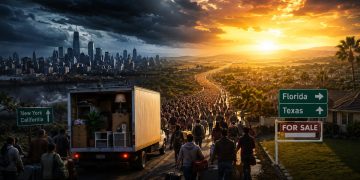


In California and Oregon large chunks of the state want to declare independence from the Marxists who have driven their states to ruin. Californians want to create a new state while the Oregon counties 3want to join Idaho. Now, a new state can be added to the mix, Illinois. Thirty three of the state’s one hundred and two counties have voted to create the new state of New Illinois. This movement is picking up steam.
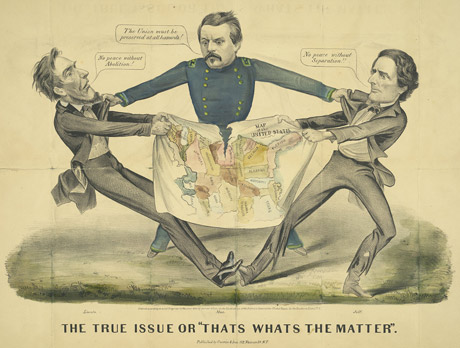
The trouble is that in each state the legislatures must set them free as the first step towards independence. But, maybe not. There is a precedence. West Virginia gained it’s independence from Virginia without the consent. Perhaps that could allow these moves to be made if there are enough Republicans with a backbone to give it a try. This would be a huge boon for the Republicans that would gain four Senate seats. That could lock in conservative dominance for decades to come in the Senate.
The Wall Street Journal published a piece on these growing efforts of independence from the tyrannical monsters who run many far-left states:
A burgeoning breakup movement is gaining momentum across Illinois, California and other states where vast swaths of red, rural counties are dominated by a few blue cities. More residents are pushing to break off and form new states. Or as a group called New Illinois State—which has declared itself independent from actual Illinois and last weekend passed the first draft of a new constitution—puts it: “Leave Illinois Without Moving.”
Gioja [a man mentioned in the article] was among the 73% of voters in predominantly rural Iroquois County who on Election Day backed the idea of forming a new state with every Illinois county except Cook, home to Chicago and more than 40% of the state’s population. The nonbinding resolution also passed in six other counties, bringing the total to 33 of Illinois’s 102 counties.
“There’s a lot of people in Chicago, and I think that they make a lot of decisions that affect people downstate,” said Gioja, who doesn’t expect a New Illinois soon. “It’s just sending a message that, ‘Hey, you know, there’s people that would like to be part of the conversation, and often aren’t.’ ”
VISIT OUR YOUTUBE CHANNELThe urban-rural divide is a longtime fissure in American life, one that President-elect Donald Trump played up on the campaign trail as he railed against large Democratic-run metropolises—while also making electoral gains in many cities. Now, emboldened separatist groups see the incoming administration as uniquely friendly to red, less populous areas that feel steamrolled by left-leaning urban power centers.
“I’m so flipping excited,” said Paul Preston, founder of New California State, which has declared all the counties outside of Los Angeles, the Bay Area and Sacramento as independent and named him governor pro tempore.
Contemporary quests to redraw the map of the U.S. have bubbled up before, with Puerto Rico and the District of Columbia each long seeking to become the 51st state, and some states floating the idea of becoming independent nations.
As for the wannabe breakaway counties, a divorce could get messy. Becoming new states would require consent of the existing legislatures—extremely unlikely in most blue states—as well as Congress, according to Article IV, section III of the U.S. Constitution. That has only happened a handful of times, including the formation of Kentucky with the consent of Virginia and the founding of Maine, which was once part of Massachusetts.
Yet when West Virginia sought statehood during the Civil War, Congress approved even without the consent of Virginia’s legislature in Richmond, which had voted to secede.
Preston thinks that could be an opening for New California. He said he plans to petition Congress for statehood based on the argument that the current California government is “a one-party communist state, and technically, they have seceded from the Union already.”


